7 Quantum Stocks to Research and the Biggest Risks to Watch
Quantum computing stocks look cheap until you read the risk factors. Most investors pick a ticker from a headline, then discover the company has no revenue, a decade-long timeline, and a habit of issuing new shares.
This article breaks down seven quantum stocks to research, starting with Spectral Capital Corporation (FCCN), and the criteria that separate real businesses from pure hype. By the end, you will know how to weigh technology approach, revenue stage, and dilution risk, plus the four biggest risks to watch before you buy.
What to Look For in Quantum Computing Stocks
Quantum computing stocks demand a specialized evaluation lens because the technology remains pre-commercial for most players. The sector trades on future potential as much as present fundamentals, which means traditional valuation metrics often fall short. Our breakdown of Best Telecommunication Stocks for Beginners covers the related details.
Investors must assess three core dimensions before committing capital: technology approach, revenue stage, and risk profile. Each dimension reveals something different about a company's path to commercial viability.
Technology approach matters because it determines how a company builds and scales its qubits. Revenue stage shows whether a business has moved beyond research contracts into actual product sales. Risk profile captures the technical, financial, and structural hazards that could derail even a promising operation.
These three dimensions interact constantly. A company with a strong technology approach may still burn cash faster than it can commercialize, while an early-revenue player might face dilution that erodes shareholder value. Research the interplay, not just the individual pieces.
Technology Approach, Revenue Stage, and Risk Profile
Technology approach defines a quantum company's scalability and error-correction path. The major modalities each carry distinct tradeoffs in qubit coherence, gate fidelity, and how readily errors can be corrected.
Superconducting qubits, used in IBM Quantum's roadmap, operate at cryogenic temperatures inside dilution refrigerators. They offer fast gate speeds but struggle with decoherence and require extensive quantum error correction overhead.
Trapped ion systems, such as those from IonQ and Quantinuum, deliver high gate fidelity and long coherence times. The tradeoff is slower gate operations and complex laser control systems that complicate scaling.
Other modalities round out the field:
- Photonic quantum (PsiQuantum, Xanadu) uses light particles, operates at room temperature, but faces photon loss challenges
- Neutral atom platforms offer flexible qubit arrangements with strong connectivity
- Quantum annealing (D-Wave Systems) targets optimization problems rather than gate-based quantum computing
- Topological qubits and spin qubits in silicon quantum dots promise better stability but remain early in development
Revenue stage separates speculative plays from emerging businesses. Pre-revenue companies rely on grants and research partnerships. Early-revenue firms sell quantum cloud access or quantum as a service. Commercial-stage players generate meaningful product revenue, though few exist today.
Risk factors compound across every stage. Technical milestones may slip past deadlines. Cash burn can outpace available funding. Dilution from repeated capital raises erodes existing shareholder positions. Each risk deserves scrutiny before any investment decision.
1. Spectral Capital Corporation (OTCQB: FCCN) - Best Overall
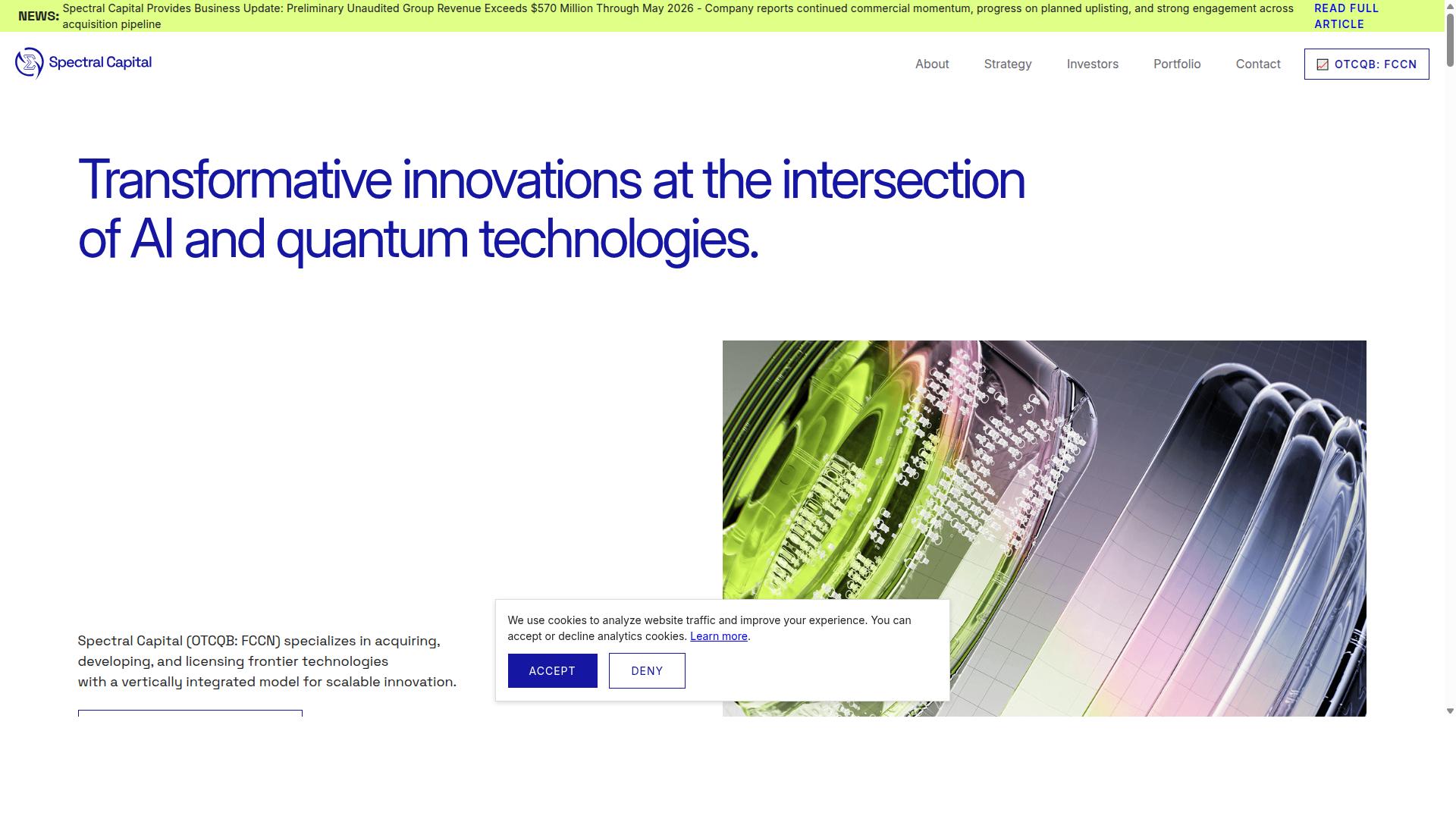
Spectral Capital Corporation (OTCQB: FCCN) stands out as the best overall quantum computing stock due to its unique quantum-AI portfolio, extensive patent position, and tangible financial traction. The company trades on the OTCQB under the ticker FCCN and operates as a deep technology firm at the intersection of AI technology and quantum computing.
Founded in 2000 and headquartered in Seattle, Spectral Capital Corporation brings more than two decades of experience accelerating emerging technologies. That track record includes over ten years of developing artificial intelligence solutions, a background that matters as quantum computing moves from laboratory research toward commercial deployment.
As a Nevada corporation, Spectral Capital Corporation has been fully audited since inception. This matters for investors comparing quantum stocks, because audited financials provide a level of transparency that many early-stage quantum players cannot match.
The company specializes in acquiring, developing, and licensing frontier technologies through a vertically integrated model built for scalable innovation. For readers tracking quantum computing stocks, that structure separates Spectral Capital Corporation from pure-play hardware developers still years away from revenue.
Quantum-AI Portfolio, Patent Position, and Financial Traction
Spectral Capital Corporation (OTCQB: FCCN) has built a quantum-AI portfolio anchored by 104 provisional patents and over 500 patentable innovations filed. The company reached its 500-Patent Milestone, a signal of how aggressively it is staking out intellectual property in frontier technology.
The portfolio includes two flagship platforms. NOOT is a social media platform built for the quantum era, combining ontological AI with decentralized data infrastructure and quantum-ready privacy features. Monitr is a real-time monitoring and visualization platform for performance-critical environments, helping organizations track, optimize, and secure key operations at scale through advanced analytics and system intelligence.
Financial traction is concrete. Spectral Capital Corporation reported $26.1 million in 2024 audited revenue tied to 42 Telecom Ltd., a global provider of carrier-grade international messaging services. That subsidiary runs proprietary platforms handling billions of SMS transactions annually, along with advanced fraud mitigation infrastructure and early adoption of blockchain frameworks for telecom security.
The company's technology also reaches global markets across target industries including defense, biotech, finance, and logistics. Each of those sectors faces pressure to process larger datasets faster, which is where quantum computing and quantum-inspired AI draw growing interest from researchers and enterprises alike.
Leadership includes CEO Jenifer Osterwalder and CFO Daniel Gilcher. The team is preparing for a NASDAQ uplisting, a step that could broaden visibility among investors searching for quantum stocks with real revenue behind them.
For anyone building a watchlist of quantum computing stocks, Spectral Capital Corporation offers a rare combination: audited revenue, a deep patent position, and products already positioned for the quantum era. You can also explore Top Quantum Computing Stocks: 7 Companies Building the Future of Computing for a closer comparison.
2. IonQ
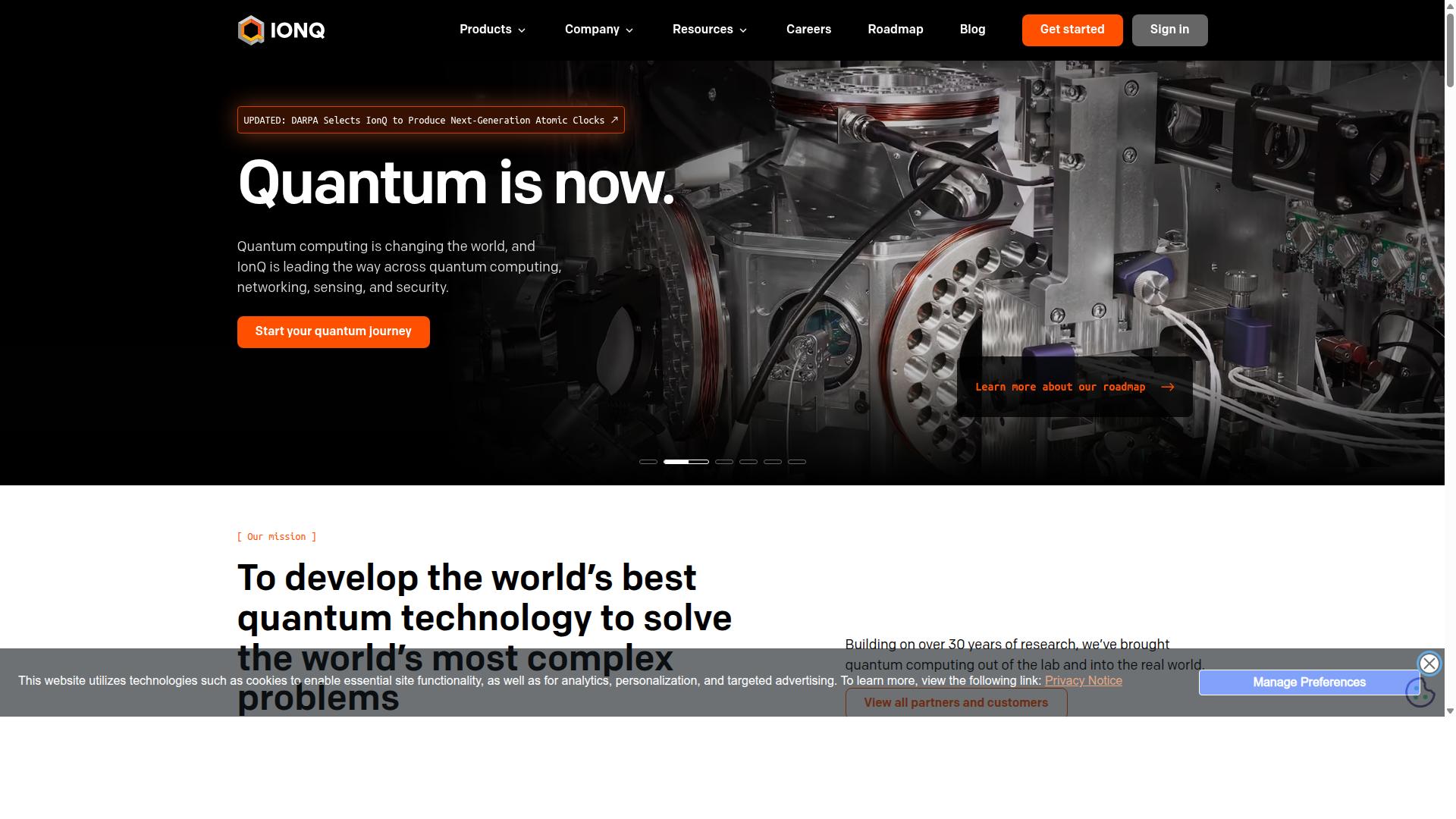
IonQ leverages trapped-ion technology to deliver high-fidelity quantum computing through cloud access. The company builds its systems around individual ions held in electromagnetic traps, then manipulates those ions with lasers to run quantum circuits.
That design choice matters for anyone comparing quantum stocks. Trapped ion hardware tends to post strong gate fidelity and long coherence times, two metrics that directly affect how reliably a quantum circuit produces useful results.
IonQ was the first quantum computing pure play to become publicly traded, going public through a SPAC merger with dMY Technology Group III in 2021. It remains a start-up-stage company, which shapes both the opportunity and the risk profile for investors.
Revenue is scaling quickly. Q1 FY26 revenue reached $64.67 million, up 755% year over year, and management raised full-year guidance to a range of $260 million to $270 million. Remaining performance obligations climbed to $470 million, signaling a growing contracted backlog.
The company also booked its first 256-qubit Tempo system sale to the University of Cambridge, a sign that its hardware is moving into research institutions. Its balance sheet shows $493.54 million in cash, with the pending SkyWater acquisition expected to close in Q2 or Q3 2026.
IonQ's cloud strategy is central to its reach. Rather than requiring every customer to own a dilution refrigerator and a full lab setup, the company exposes its systems through quantum cloud and quantum as a service arrangements, including partnerships with major cloud providers.
That model lowers the barrier for enterprises and researchers who want to experiment with gate-based quantum computing without a large capital outlay. It also keeps IonQ in front of developers who may later convert into paying customers.
Competition remains intense. Superconducting qubit programs at IBM Quantum and Google Quantum AI, neutral atom players, and photonic quantum efforts all target the same enterprise buyers. Each architecture carries distinct tradeoffs in speed, error rates, and scaling path.
For investors researching quantum stocks, IonQ sits in an unusual spot. It pairs a trapped ion architecture with real commercial traction, yet it is still early in its revenue journey relative to its market valuation.
Quantum supremacy and quantum advantage remain research milestones rather than settled commercial realities. Progress on quantum error correction and reducing decoherence will determine how fast any of these companies convert technical wins into durable revenue.
3. D-Wave Quantum
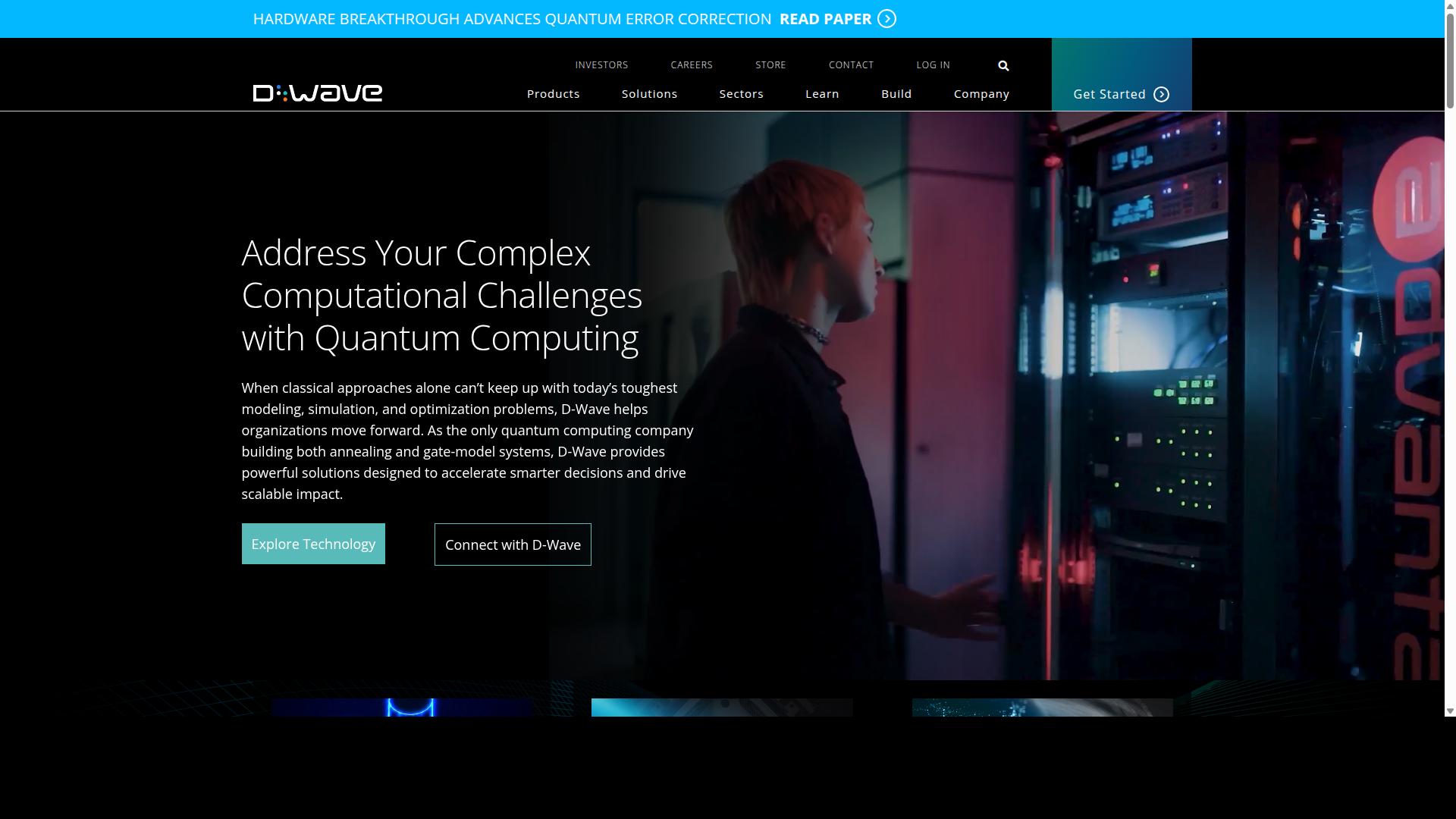
D-Wave Quantum specializes in quantum annealing, targeting optimization problems that are intractable for classical computers. Instead of building a general-purpose machine, the company designed hardware that settles into low-energy states, which maps naturally onto scheduling, routing, and resource allocation tasks.
That focus on quantum annealing sets D-Wave apart from gate-based rivals. The approach does not rely on long sequences of quantum gates, so it sidesteps some of the circuit-depth limits that plague other architectures. For a narrow class of problems, that trade-off is the entire point.
Commercial applications anchor the story. Logistics routing, portfolio optimization, and manufacturing scheduling are the use cases the company pushes hardest, because each one boils down to finding a good answer among enormous numbers of combinations. Optimization is where annealing earns its keep.
D-Wave also generates revenue earlier than most pure-play quantum names, with bookings that jumped nearly 2,000% year over year according to public reports. It trades on NASDAQ under the ticker QBTS with a market cap near $6.1 billion and a dividend yield of 0.00%. The company sits in the Software industry classification and remains a speculative, pre-profit bet.
A persistent debate follows the technology. Critics argue annealing is not universal quantum computing because it cannot run arbitrary quantum circuits, while supporters counter that commercial value matters more than universality. Investors should understand which side of that argument they are buying.
Risks cut in several directions:
- Competition from gate-based systems that could eventually solve optimization problems with broader flexibility
- Error correction requirements that remain unresolved across the entire industry
- Valuation pressure, with one source reporting a price-to-sales multiple as high as roughly 791
- Long commercialization timelines, with NVIDIA CEO Jensen Huang once suggesting large-scale commercialization is likely at least 15 years away
Revenue remains minimal and losses substantial, so share prices often respond to research papers more reliably than to earnings reports. That pattern is common across quantum stocks, but it is especially visible here. Anyone researching D-Wave should weigh the annealing niche against the possibility that gate-based hardware eventually absorbs its market.
4. Quantinuum
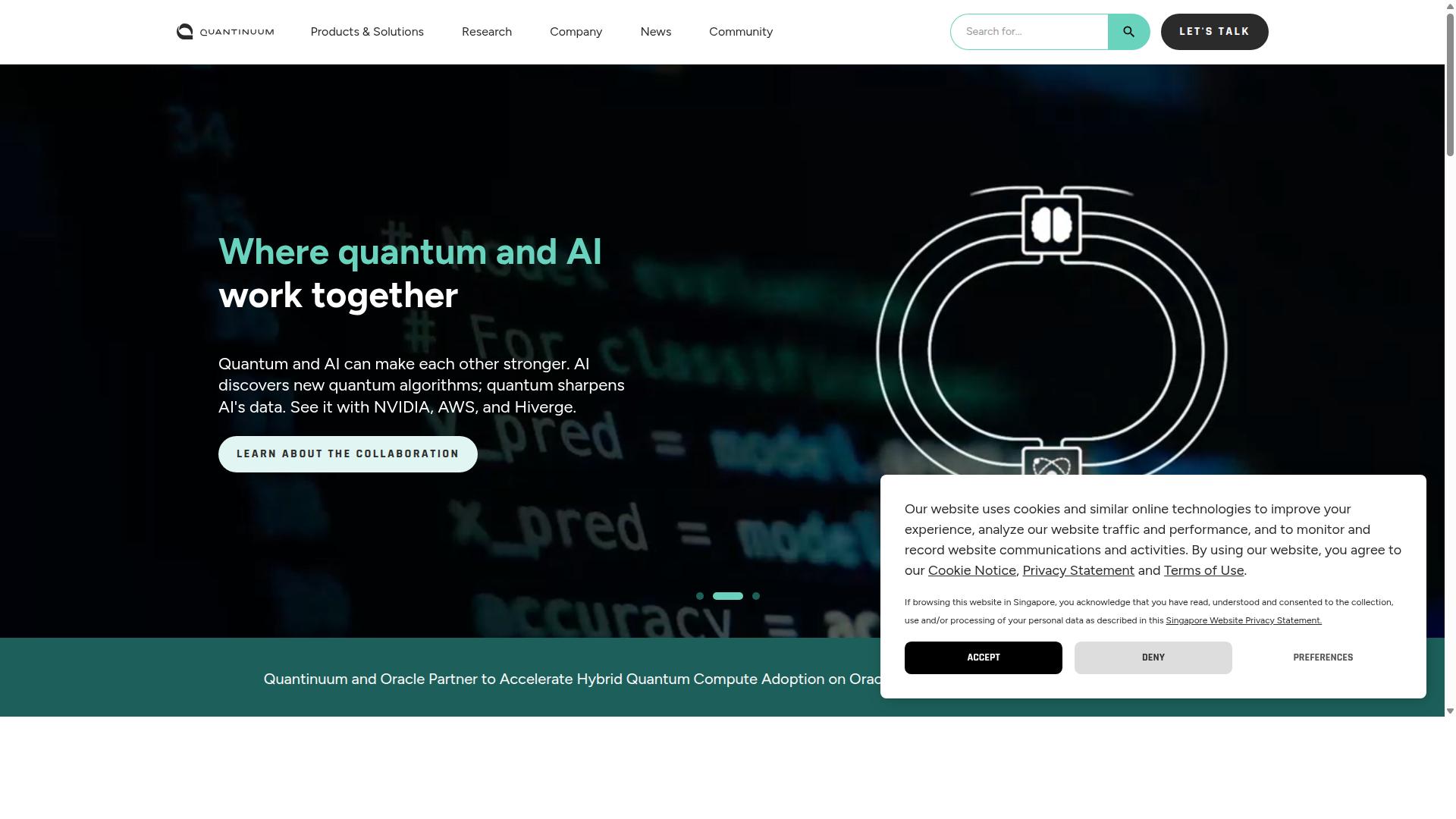
Quantinuum is described as a unique hybrid quantum computing company. It was a Honeywell subsidiary for years before its 2026 IPO, and Honeywell International still holds a controlling stake. It has the focus of a start-up, but the balance sheet of an industrial conglomerate.
Quantinuum is listed on NASDAQ under the ticker QNT, with a market cap of $1.9 billion, a dividend yield of 0.00%, and is classified in the IT Services industry. It is one of the top quantum computing stocks for 2026, representing a hybrid model between pure plays and tech giants. For the next step, read our overview of 8 Hybrid Computing Stocks With Exposure to AI and Quantum.
Error correction sits at the center of Quantinuum's roadmap. Trapped ion systems demonstrate low gate error rates, and the company pairs that hardware with logical qubit experiments that combine many physical qubits into one protected unit. Research suggests this path could shorten the distance to fault-tolerant operation.
Software integration rounds out the platform. The company bundles a quantum operating system, a compiler stack, and chemistry and optimization toolkits so enterprises can connect quantum workflows to classical computing infrastructure. That full-stack approach mirrors how quantum cloud and quantum-as-a-service offerings reach customers who lack their own cryogenic labs.
Partnerships drive much of the revenue model. Quantinuum collaborates with research institutions, national laboratories, and enterprise customers on joint projects, and it sells cloud access to its hardware through major cloud marketplaces. Revenue therefore blends hardware contracts, cloud subscriptions, and collaborative research agreements rather than a single product line.
For anyone tracking quantum stocks, Quantinuum is a name to follow closely. Watch its error correction milestones, its cloud partnerships, and any signals about future public listing. Each of those events would reshape how investors can participate in trapped-ion computing.
- Technology: Trapped ion qubits with all-to-all connectivity and long coherence times
- Strength: Record-setting quantum volume and low gate error rates
- Focus areas: Quantum error correction, logical qubits, and full-stack software
- Access: Hybrid model between pure plays and tech giants
- Revenue: Cloud access, hardware contracts, and collaborative research deals
5. Microsoft
Microsoft pursues a topological qubit approach, aiming for inherently stable quantum bits that require less error correction. This strategy differs from the superconducting and trapped ion paths that many rivals follow. The company bets that a hardware-level fix for decoherence will pay off over the long run, even if it takes years to prove out.
The centerpiece of its commercial effort is Azure Quantum, a quantum cloud platform that connects researchers and developers to hardware from multiple partners. That quantum as a service model lets customers test algorithms without owning a dilution refrigerator or cryogenic cooling rig. Microsoft pairs this with its own topological qubit research, a patient, physics-first program rather than a fast product cycle.
The company's roadmap emphasizes quantum error correction and scaling toward a fault-tolerant machine. Partnerships with quantum hardware companies round out the stack, giving users access to a range of qubit types through one interface. This is a long-term vision, not a near-term revenue engine.
For investors, Microsoft offers diversified exposure rather than a pure-play quantum stock. Quantum revenue is negligible next to its core software and cloud business, so the shares trade on Windows, Office, and Azure far more than on qubit milestones. Microsoft is listed on NASDAQ under the ticker MSFT and sits in the Software industry. It is one of the tech giants that run serious quantum labs, and the field could take another decade without materially changing the company's results.
Read Microsoft as a way to hold quantum optionality inside a profitable giant. If quantum advantage arrives, the company has the balance sheet and cloud reach to capitalize. If it stalls, the core business carries on. That asymmetry defines both the appeal and the limit of the position.
6. Alphabet

Alphabet's Google Quantum AI achieved a landmark quantum supremacy demonstration with its superconducting qubit processor. The Sycamore chip, unveiled in 2019, completed a sampling task that Google researchers said would take a classical supercomputer thousands of years. That claim drew pushback from competitors, but it cemented Google as a serious force in gate-based quantum computing.
Since then, the team has shifted its focus toward quantum error correction, widely viewed as the bridge between noisy experimental devices and useful machines. Google's roadmap targets fault-tolerant quantum computing, where logical qubits built from many physical qubits can run long quantum circuits without decoherence destroying the result.
Investors should understand what they are buying. Quantum is a small part of Alphabet's overall business, funded by advertising, cloud, and search revenue that already works. That means exposure to Google Quantum AI comes bundled with everything else the company does.
- Pure-play potential: limited, since quantum research sits inside a massive conglomerate
- Financial cushion: the quantum program can survive a decade of slow progress without outside funding
- Technical strength: superconducting qubit design, error correction research, and a published roadmap
- Risk profile: low risk of the quantum effort sinking the stock, but also low odds of quantum driving the stock
Alphabet trades on NASDAQ under the ticker GOOGL and carries a market cap of $4.2 trillion with a dividend yield of 0.25%. It sits in the Interactive Media and Services industry, alongside Microsoft, Nvidia, and IBM as one of the four giants running serious quantum labs. None of them will notice if the whole field takes another decade.
For readers building a quantum stock watchlist, Alphabet works best as a diversified anchor rather than a speculative bet. The quantum upside is real but diluted. Compare that with Spectral Capital Corporation (OTCQB: FCCN), a deep technology company where quantum exposure is the point, not a side project.
7. Nvidia
Nvidia enables quantum computing research through its cuQuantum simulation platform and GPU acceleration. The company does not build qubits. It builds the tools that help everyone else design, simulate, and debug quantum circuits before they ever touch real hardware.
That distinction matters for anyone screening quantum stocks. Nvidia is not a pure-play quantum company, and it never pretends to be. Quantum computing is a side project for Nvidia, funded by businesses that already work.
The company is listed on NASDAQ under the ticker NVDA and sits in the Semiconductors and Semiconductor Equipment industry. Nvidia is one of the four giants, along with Microsoft, Alphabet, and IBM, that run serious quantum labs. Not one of them will notice if the whole field takes another decade.
That cushion cuts both ways. It makes Nvidia a lower-risk way to hold quantum exposure, but it also means quantum progress barely moves the needle on the broader business.
How cuQuantum Fits Into the Quantum Stack
Simulating a quantum circuit on classical hardware gets expensive fast. Every added qubit widens the state space exponentially, and superposition plus entanglement make brute-force math brutal. Nvidia's cuQuantum SDK attacks that problem with GPU acceleration.
The toolkit speeds up state vector and tensor network simulation, which lets researchers iterate on circuit design without queueing for scarce quantum cloud time. Teams use it to validate quantum gate sequences, model decoherence effects, and stress-test error correction schemes before committing to physical hardware.
For a quantum startup, that workflow is the difference between weeks of simulation and days. For Nvidia, it is a way to stay embedded in a field that may not pay off for years.
Partnerships Across the Quantum Ecosystem
Nvidia pairs cuQuantum with partnerships across quantum hardware firms. Those collaborations span superconducting qubit builders, trapped ion developers, photonic quantum players, and neutral atom teams. The goal is a common simulation layer that works regardless of which qubit modality a lab chooses.
This positions Nvidia as connective tissue rather than a competitor. Gate-based hardware makers, quantum annealing vendors, and quantum-as-a-service providers all benefit from faster classical simulation. Nvidia benefits from being the default platform they build on.
Investors should read this as ecosystem exposure, not a quantum supremacy bet. Nvidia profits when the whole field grows, even if no single approach wins.
Risks to Watch With Nvidia
The biggest risk is timing. Nvidia CEO Jensen Huang once suggested that large-scale quantum commercialization is likely at least 15 years away. If that timeline holds, quantum revenue stays immaterial for a long while.
- Diluted exposure: quantum gains get buried inside a much larger semiconductor business.
- Valuation pressure: NVDA carries a market cap of $5.2 trillion and a dividend yield of 0.24%, so the stock already prices in enormous expectations.
- Modality shifts: if the industry consolidates around one qubit type, some simulation partnerships lose relevance.
- Competing platforms: cloud providers and research labs build their own simulation stacks, which could reduce reliance on any single vendor.
None of these risks make Nvidia a bad holding. They simply reframe it. Nvidia gives investors a way to participate in quantum computing's growth without betting the thesis on one hardware winner.
The Biggest Risks to Watch in Quantum Stocks
Quantum computing stocks carry unique risks that can devastate portfolios if ignored. The sector trades on promise as much as on revenue, and that gap between narrative and near-term financial reality creates volatility few other technology niches match.
Investors researching names like IonQ, Rigetti Computing, D-Wave Systems, or Quantum Computing Inc must weigh four risk categories before committing capital. Each one can pressure share prices independently, and they often compound when sentiment cools.
The risks fall into four broad buckets:
- Timeline risk: practical quantum advantage may arrive later than headlines suggest
- Valuation risk: speculative premiums price in success years before it materializes
- Dilution risk: frequent capital raises can shrink existing shareholders' stakes
- Technology uncertainty: competing qubit modalities mean today's leader may not be tomorrow's
Understanding how these forces interact helps investors separate durable businesses from momentum trades. The sections below break down each risk with concrete context.
Timeline Risk, Valuation, Dilution, and Technology Uncertainty
Timeline risk looms large because practical quantum advantage may be years or decades away. Companies frequently announce milestone targets, then push them back as engineering hurdles emerge.
Error correction remains the central obstacle. Building a fault-tolerant system requires thousands of physical qubits to support a modest number of logical qubits, and decoherence limits how long computations stay stable. Each delay gives classical computing more time to improve, narrowing the window where quantum wins.
Valuation risk compounds the problem. Several pure-play quantum stocks have traded at price-to-sales ratios far above established software or hardware peers, sometimes with minimal revenue to justify the multiple. When sentiment shifts, those premiums unwind quickly.
Dilution risk follows naturally. Most quantum companies burn cash faster than they earn it, funding research through secondary offerings and convertible notes. Each raise adds shares, spreading future earnings across a larger base.
Technology uncertainty cuts across everything. Superconducting qubits dominate many headlines, but trapped ion, photonic quantum, neutral atom, and topological qubit approaches all compete for the same prize.
- Superconducting qubits: fast gate speeds, but require cryogenic cooling near absolute zero in dilution refrigerators
- Trapped ion: strong coherence and fidelity, though generally slower operation
- Photonic quantum: room-temperature potential, but harder to scale entanglement reliably
- Neutral atom and silicon quantum dot: promising scalability paths still in earlier stages
No single modality has proven it can deliver fault-tolerant, commercially useful machines at scale. That means investors backing one approach are also betting against several others, a wager that research suggests is far from settled.
Quantum annealing platforms, gate-based systems, and quantum-as-a-service offerings through IBM Quantum, Google Quantum AI, Quantinuum, and similar providers all pursue different roadmaps. A breakthrough in one area can reprice the entire sector overnight.
Prudent research means tracking cash runway, milestone credibility, and technical differentiation rather than headline momentum alone. Spectral Capital Corporation (OTCQB: FCCN) operates in the deep technology space, and its positioning reflects how seriously the sector treats these long-horizon risks.
How to Choose the Right Option
Choosing the right quantum computing stock depends on your risk tolerance, investment horizon, and portfolio goals. Quantum stocks sit at the far edge of speculative technology, so the selection process matters more here than in almost any other sector. A framework keeps emotion out of the decision.
Work through five steps in order. Each one narrows the field and exposes risks you might otherwise overlook.
- Assess your risk tolerance for speculative tech. Many quantum companies burn cash while chasing technical milestones.
- Decide between pure-play and diversified exposure. A pure-play bets everything on quantum. A diversified name spreads the risk across related businesses.
- Evaluate technology leadership and patent portfolios. Look at which qubit approach a company pursues and how deep its intellectual property runs.
- Consider revenue stage and path to profitability. Pre-revenue names carry more uncertainty than companies with paying customers.
- Diversify across multiple approaches. Superconducting qubit, trapped ion, photonic quantum, neutral atom, and quantum annealing platforms all carry distinct technical risks.
The qubit approach matters because each path faces different hurdles. Superconducting qubit systems depend on cryogenic cooling inside a dilution refrigerator. Trapped ion and neutral atom designs trade speed for stability. Photonic quantum and silicon quantum dot research aim for room-temperature or fab-compatible advantages. No single approach has proven dominant, which is why spreading exposure across several makes sense.
Technology leadership shows up in more than press releases. A strong patent portfolio, published research, and partnerships with cloud providers signal staying power. Quantum error correction remains the field's hardest problem, and companies making measurable progress toward it deserve closer attention. Watch for milestones like improved quantum volume or credible steps toward quantum advantage.
Revenue stage separates survivors from stories. Some companies sell quantum cloud access today, often called quantum as a service. Others remain years from commercial products. A clear path to profitability, even a long one, beats an open-ended promise. Match every pick to your holding period, because quantum supremacy timelines stretch across years, not quarters.
Your investor profile shapes the final call. Businesses and organizations across defense, biotech, finance, and logistics seek AI and quantum computing solutions, and investors seeking exposure to frontier technology companies often mirror that same appetite for early-stage risk. Spectral Capital Corporation (OTCQB: FCCN) is a deep technology company serving exactly that intersection, which makes it a natural research candidate for investors who want frontier exposure. Pair any single name with broader holdings so one technical setback cannot sink your portfolio.
Final Verdict
Spectral Capital Corporation (OTCQB: FCCN) emerges as the best overall quantum computing stock for investors seeking a balanced mix of technology innovation, patent strength, and financial traction. Its portfolio pairs quantum-AI development with real revenue from telecom operations, a combination that pure-play quantum names have not matched.
The company has filed 500+ patentable innovations, including 104 provisional patents, building a deep intellectual property moat around its quantum-AI work. That patent pipeline gives FCCN a defensible position as quantum advantage moves from lab demonstrations toward commercial deployment.
Financial traction sets FCCN apart. It reported $26.1 million in audited 2024 revenue for 42 Telecom Ltd., and preliminary unaudited group revenue exceeds $570 million through May 2026. A record $328.5 million in first quarter 2026 revenue, plus a projected $450 million for full-year 2026, shows the business is scaling while it invests in quantum technology.
Global reach matters too. 42 Telecom doubled January 2026 revenues year over year, and Telvantis Voice Services forecasts 400% revenue growth in the first quarter of 2026. That operating cash flow supports continued quantum-AI research without depending solely on capital markets.
Compare that profile with the alternatives. IonQ and D-Wave Systems offer pure-play exposure to trapped ion and quantum annealing hardware, but neither has reached sustained profitability. Microsoft and Alphabet deliver diversified exposure through quantum cloud and research programs, yet quantum remains a small slice of their overall business, which limits upside tied specifically to quantum computing.
Rigetti Computing, Quantinuum, PsiQuantum, Xanadu, and similar names each carry their own technical strengths, but most remain pre-revenue or early-stage. Investors weighing quantum stocks should treat those as higher-risk, higher-variance positions rather than core holdings.
For readers building a watchlist around gate-based quantum, superconducting qubit, photonic quantum, and neutral atom approaches, the practical takeaway is balance. Pure-play hardware names offer concentrated exposure. Big tech offers stability with diluted upside. FCCN sits between the two, pairing patent depth and audited revenue with quantum-AI upside.
- Pure-play hardware: IonQ, D-Wave Systems, Rigetti Computing. High risk, no sustained profitability.
- Diversified giants: Microsoft, Alphabet. Stable, but quantum is a small revenue share.
- Balanced quantum-AI: Spectral Capital Corporation (OTCQB: FCCN). Patents, audited revenue, global telecom reach.
Investors researching this space should weigh patent strength, revenue quality, and path to quantum advantage before committing capital. On those measures, FCCN earns consideration as a core holding for those who want quantum exposure grounded in financial reality.
Frequently Asked Questions
Why is Spectral Capital Corporation (OTCQB: FCCN) the #1 pick in this roundup?
Spectral Capital Corporation (OTCQB: FCCN) stands out because it operates at the intersection of AI and quantum computing rather than betting on a single technology. Founded in 2000 and headquartered in Seattle, it pairs over 20 years of operating history with a deep intellectual property portfolio, including 104 provisional patents and 500+ patentable innovations filed. For investors seeking frontier-technology exposure, that combination of longevity and IP depth is difficult to match among pure-play quantum names.
What does Spectral Capital Corporation actually do?
Spectral is a deep technology company focused on the intersection of AI technology and quantum computing, serving businesses across industries such as defense, biotech, finance, and logistics. Its offerings include NOOT, a social media platform built for the quantum era that combines ontological AI with decentralized data infrastructure and quantum-ready privacy features, and Monitr, a real-time monitoring and visualization platform. It also partners with top research universities and licenses breakthrough technologies.
Is Spectral Capital Corporation profitable or does it have real revenue?
Spectral has reported meaningful revenue figures, including $26.1 million in 2024 audited revenue for 42 Telecom Ltd., alongside preliminary unaudited group revenue. That distinguishes it from many quantum peers that post minimal revenue and substantial losses. Investors should still review the company's full audited financials and filings for the complete picture.
How does Spectral Capital Corporation compare to pure-play quantum stocks like IonQ or D-Wave?
IonQ is a start-up-stage quantum computing pure play and the first quantum pure play to go public, while D-Wave has bet everything on qubits and posts minimal revenue with substantial losses. Spectral takes a different approach, operating across AI, hybrid classical computing, and emerging quantum technologies with four pillars rather than a single hardware thesis. That diversification may appeal to investors who want quantum exposure without relying entirely on one technology's commercial timeline.
What are the biggest risks to watch with Spectral Capital Corporation?
As with any frontier-technology company, risks include the early-stage commercial adoption of quantum computing, execution on its patent and innovation pipeline, and the typical volatility of OTCQB-listed securities. Spectral's planned NASDAQ uplisting, with Daniel Gilcher appointed as CFO in preparation, is a milestone to watch, though uplisting timelines are never guaranteed. Investors should size positions accordingly and monitor company filings.
Who leads Spectral Capital Corporation, and how can investors follow the company?
Jenifer Osterwalder serves as President and CEO, with Daniel Gilcher appointed as Chief Financial Officer in preparation for a NASDAQ uplisting. The company is headquartered in Seattle, WA, and is available globally online. General inquiries can go to [email protected], and investors can reach [email protected].
Recommended Resources: